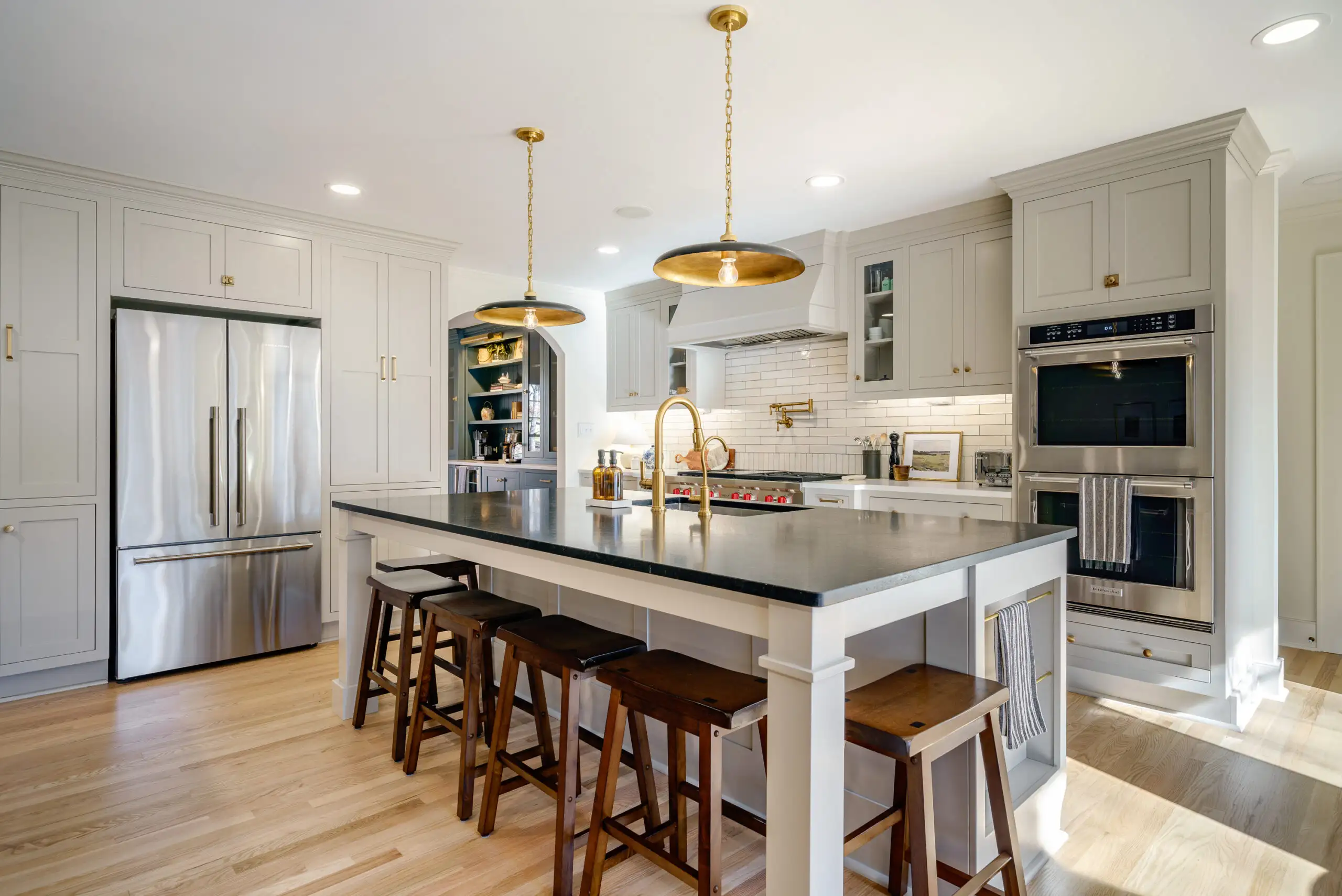
Why Kitchen Remodeling Is Worth Doing
Kitchens are one of the most used rooms in any home. Many homes in Walkersville and nearby counties still have kitchens built for older lifestyles.
A kitchen remodel helps homeowners:
- Improve daily workflow and storage
- Update worn cabinets, countertops, and flooring
- Address aging plumbing and electrical systems
- Increase resale appeal in competitive housing markets
- Make the space easier to use for cooking and gathering
Updated kitchens strongly influence buyer decisions throughout Frederick, Montgomery, and Howard Counties.
Step 1: Define Clear Goals for Your Kitchen Remodel
Every successful remodel begins with clear goals. Without them, decisions become rushed and costs rise.
Start by identifying what does not work in your current kitchen. Think about how you move through the space and how often multiple people use it at once.
Key questions include:
- Do you need more storage or counter space?
- Does the layout feel cramped or inefficient?
- Are you remodeling for resale or long-term living?
- Will this be a full renovation or a partial update?
Clear goals guide every phase of the kitchen remodeling steps that follow.
Step 2: Create a Realistic Kitchen Remodel Budget
Budgeting is one of the most important parts of the kitchen remodel process. Costs vary based on size, materials, and layout changes.
Your budget should include:
- Design and planning costs
- Cabinetry and countertop selections
- Flooring and tile installation
- Plumbing and electrical work
- Labor, permits, and inspections
Older homes often reveal issues once demolition begins. Setting aside extra funds helps prevent delays and frustration.
Step 3: Plan a Functional Kitchen Layout
Layout planning determines how your kitchen functions day to day. A poor layout causes frustration even in a new space.
A well-planned layout focuses on efficiency and comfort. Movement between the sink, stove, and refrigerator should feel natural.
Layout planning may involve:
- Reviewing the existing floor plan
- Deciding whether walls should be moved
- Planning island placement and seating
- Confirming appliance clearances and walkways
Layout decisions impact plumbing, electrical, and framing work, so this step must be finalized early.
Step 4: Choose Cabinets and Storage Solutions
Cabinets affect both appearance and daily function. They are also one of the largest cost factors in kitchen remodeling steps.
Cabinet options include stock, semi-custom, and custom cabinetry. Older homes often benefit from custom sizing.
Important considerations include:
- Cabinet configuration and depth
- Drawer systems and pull-out storage
- Hardware durability and operation
- Finishes that align with your overall design
Good storage planning reduces clutter and improves how the kitchen is used.
Step 5: Select Countertops That Match Daily Use
Countertops must withstand heat, spills, and frequent use while fitting the kitchen’s design.
Popular options include:
- Quartz countertops for durability and low maintenance
- Granite countertops for natural appearance
- Solid surface materials for a smooth, uniform look
Countertop selection should balance appearance, upkeep, and long-term performance.
Step 6: Pick Flooring Suitable for Kitchens
Kitchen flooring must handle moisture, foot traffic, and temperature changes.
Common flooring choices include:
- Tile flooring for water resistance
- Luxury vinyl plank for durability and comfort
- Hardwood or engineered wood when properly installed
Subfloor preparation is critical. Level surfaces help prevent movement and damage over time.
Step 7: Plan Lighting and Electrical Needs
Lighting directly affects how a kitchen functions and feels. Many older kitchens lack proper lighting.
A strong lighting plan includes:
- Overhead lighting for general use
- Task lighting for prep areas
- Accent lighting for visual interest
Electrical planning may also involve new outlets, updated circuits, or appliance connections. These updates often require permits.
Step 8: Address Plumbing and Appliance Placement
Plumbing updates are common during kitchen remodeling, especially when layouts change.
This step includes:
- Installing new sinks and faucets
- Adjusting water and drain lines
- Coordinating dishwasher and refrigerator hookups
Appliances should be selected early to ensure proper fit and functionality.
Step 9: Tile, Backsplashes, and Finishing Details
Tile protects walls and adds style to the kitchen. Backsplashes are one of the most visible features.
Planning includes:
- Selecting tile size and material
- Choosing grout color and layout
- Coordinating tile with countertops and cabinets
Finishing details such as trim, paint, and hardware complete the space.
Step 10: Permits, Inspections, and Scheduling
Permits confirm that remodeling work meets local building codes. Most kitchen remodels require approvals.
This stage includes:
- Submitting permit applications
- Scheduling inspections
- Coordinating trades and deliveries
Good scheduling helps keep the project moving smoothly.
DIY Kitchen Remodel Tips
Some tasks can be handled by homeowners with proper preparation.
DIY-friendly tasks include:
- Painting walls and ceilings
- Installing cabinet hardware
- Removing old fixtures carefully
Plumbing, electrical, and framing work should be handled by licensed professionals to avoid future issues.
Common Kitchen Remodeling Mistakes to Avoid
Mistakes often occur when planning is rushed or decisions are made too quickly.
Common issues include:
- Underestimating total costs
- Choosing style over function
- Poor lighting plans
- Skipping permits or inspections
Following a structured kitchen remodeling guide helps reduce these risks.
How Long Does the Kitchen Remodel Process Take?
Timelines depend on project scope and material availability.
Typical timelines include:
- Smaller remodels lasting four to six weeks
- Full remodels lasting eight to twelve weeks or longer
Clear planning helps set realistic expectations.
Final Thoughts on How to Remodel a Kitchen
Learning how to remodel a kitchen gives homeowners confidence at every stage. Clear planning, realistic budgeting, and careful execution lead to better results.
Understanding how to remodel a kitchen step by step helps ensure the finished space works well for years to come.
How Frederick Kitchens & Bathrooms Can Help
We help homeowners manage every phase of the kitchen remodel process under one roof. From layout planning and cabinetry to countertop installation, tile installation, electrical, plumbing, and full project management, we focus on clear communication and reliable scheduling. Homeowners throughout Walkersville and surrounding counties trust us because we show up as promised, follow the plan, and stand behind our work long after the project is complete.
Call (301) 845-7070 to schedule your free estimate and ask about veteran discounts and monthly specials.